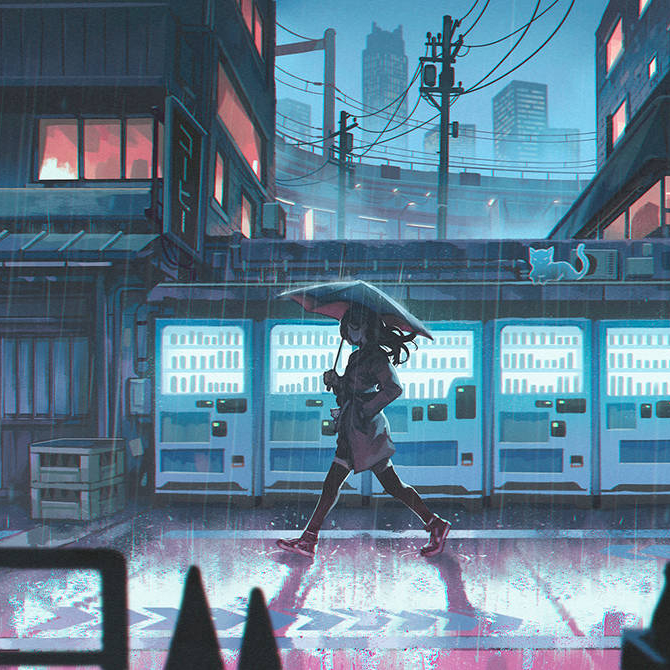
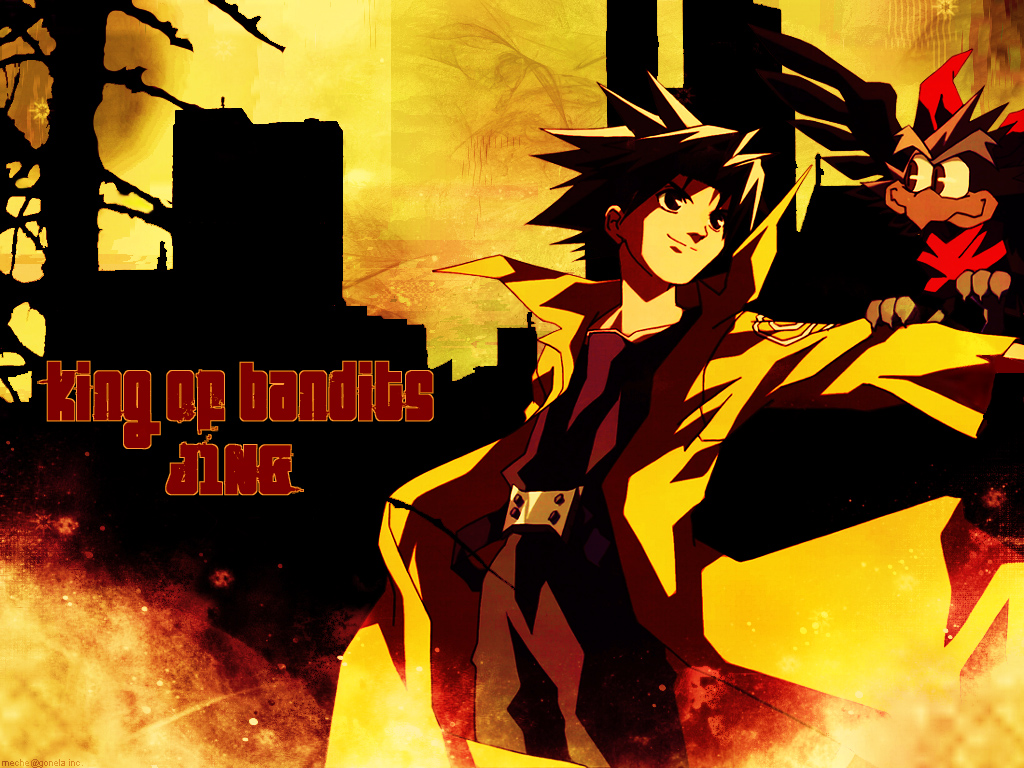
Artwork from “Jing: King of Bandits” by Yuichi Kumakura
“Jing: King of Bandits,” is probably one of my most memorable childhood experiences, and with its brief run I would consider it quite a good example of short and sweet. Though it’s admittedly been quite some time since I re-watched the show, let’s dig into the ingredients that keep me coming back.
The Music
First and foremost, we gotta talk about the great soundtrack this anime has. Being that the opening is the first point of contact, it really helps to set the mood. Most if not the whole OST is handled by “Scudelia Electro” a band that deserves a larger audience in my opinion, and for fans of j-rock they really set the tone for the episode. The upbeat opening, the well placed ambient tracks throughout the show and the catchy ending coalesce to keep you vibing throughout the watch session.
The OST, in particular the opening song, is one thing that has stuck with me since I was a young kid. “Shout It Loud” of course also by Scudelia, is somehow one of the best anime openings I’ve heard and generally just a really good song. I think pretty much anyone would start tapping their foot when they hear it. Unfortunately despite my appreciation of it, I don’t have quite enough of a background in music to break down why I think it’s so amazing, by suffice it to say, a quick listen should answer most inquires. Here’s a link for your convenience https://youtu.be/HsYTrsSNZHI.
The Visuals
One thing that I’ve been saying for the longest time is that despite the inferior technology, old anime and artstyles tend to stand out more and take steps to really be unique. Don’t get me wrong, I highly enjoy the artstyles of many modern anime as well, but to be fair to an anime made in 2002, I’ll try to keep my observations in context. Something that you’ll notice right away, is the use of contrast and eye catching colors, particularly in the opening. For those that have watched the show, or those who are planning to, you would probably agree that Jing’s jacket carries the show. Totally kidding, but it is pretty badass. That brings me to another part of the show’s aesthetic that I personally really enjoy, which is all the folds in clothing, and the sharp angles. It gives the impression of the cool, semi-edgey and action-y adventure that the show most certainly proves itself to be. To an extent the show’s style is a product of the time, as the sort of techniques they use were certainly more common around the early 00’s and late 90’s, but I still think Jing differentiates itself pretty well.
Of course while we are on the subject of visuals, I would be somewhat remiss to not mention the action scenes and some of the actual animation. I’d certainly say that the fights are somewhat memorable but in some sense the violence isn’t the most important part of the show. Unlike a Naruto, which came out the same year, that went above and beyond with combat animation, Jing tried to do well with what it had. I’d say that the animaton fits well with the personality of Jing and the objective of the show which is to steal whatever treasure he’s after in each arc. There are definitely some hype moments though. Whenever Jing “strategically relocates” there is usually a good bit of fun that ensues, for instance.
The Story
Rather than spoil the whole plot, as that’s fairly pointless for such a short anime, I’ll talk about the general concepts, themes, and the character’s personalities a bit. If you plan to watch the show, you should probably do that before reading this part however. Since I mentioned it in the last section, let’s start with Jing’s personality. The anime incarnation of Jing, since the manga is quite different, is depicted as being cool, a little smug and a total badass of few words. He more so shows his personality through his actions as he is somewhat of a noble thief, almost a Kaito Kid type character, who’s also quite the combatant. His companion Kir, in an odd way represents all of the vices you would expect from a bandit, such as loving money, women and anything shiny, and acts almost as a ventriloquist’s puppet. Of course Kir is not a puppet, but while he doesn’t speak for Jing, he sort of represents the avaricious heart you would expect him to possess given his occupation. Beyond that there is only like one other recurring character, but I’ll let you watch the anime to learn more about that. One major complaint you could levy at the show, is that because Jing bounces around so much, and we have few main characters, Jing can seem a little flat at times, and other characters can seem a bit trivial. I think after watching the entire show you begin to understand that Jing develops relationships with temporary characters in a kind of unspoken way, but we don’t get much traditional, character development. One exception to that is the section on Jing’s backstory where we do get a bit of development, but that is a treat better left to experience yourself.
Another thing that made the show so special to me as a kid was the fact that Jing visits so many places in his travel. Generally he goes to some new place almost every episode to steal whatever special treasure he is looking for, although what that treasure actually is, can often be esoteric, and as a result you get to see a lot of different environments and imagery. The show definitely serves as excellent fuel for the imagination in my opinion, and despite it being so short, a mere 13 episodes plus a 3 episode ova, it packs a lot in. This does create the lack of character building that I mentioned, but it does allow for lots of worldbuilding, and makes the show feel like the adventure of an ultra thief, rather than some run-of-the-mill shounen.
Final Thoughts
I’m sure that I could properly rank this anime, but I sort of feel like based on the depth that I’ve gone into about the different components I don’t really need to. I think objectively speaking the anime was somewhere between a 7 and an 8 out of 10 when it came out, but fortunately I would say that’s still basically true 19 years later. It’s the sort of niche experience that most anime don’t strive for because it doesn’t sell like crazy, but I’d argue it makes it unique and non-competitive with other works that have come after it. I can definitely say that if you are looking for training arcs, super interesting character development or Naruto fight scenes, this is not the anime. If you are looking for something fun and a bit obscure to dig into over the course of a weekend, I would highly recommend this anime. It may not blow you away, but the tropes in it are not used terribly frequently, unless you watch a lot of noble thief shows, and if nothing else I think it will spark your imagination for the world around you, and get that soundtrack quickly added to a playlist.
 AnimeExplicated
Leave a comment